The Rise of Drones-as-a-Service (DaaS)

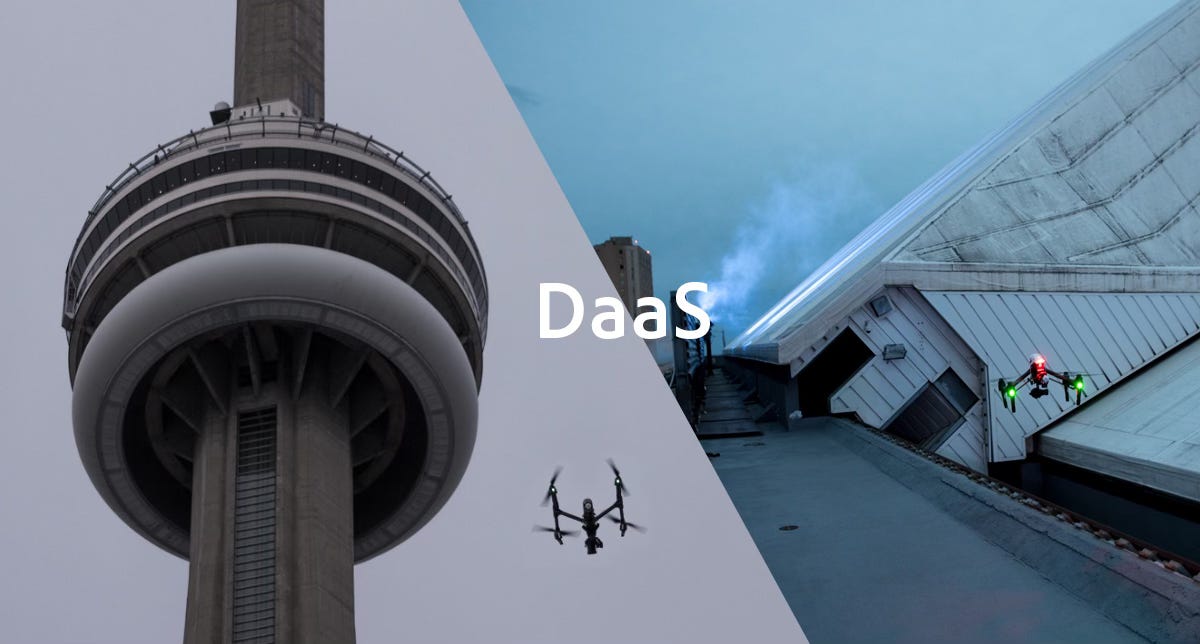
Imagine a drone that lives in a weatherproof pod on your site. It charges itself, flies scheduled missions, and returns automatically. The data is processed and delivered as a ready-to-use report in near real time. That’s Drones-as-a-Service (DaaS): subscription access to aerial data without the burden of buying hardware, training pilots, or carrying liability for operations. Where conventional drone programs require capital investment, maintenance, and insurance, DaaS delivers the same output as a managed service.
SkySnap’s 2025 DaaS Initiatives:
In Canada, SkySnap is preparing to launch a fully managed drone-in-a-box service. Each pod is remotely supervised by humans, and SkySnap handles all data processing and delivery. Two initial deployments in 2025:
Crop monitoring: A single pod will serve multiple farms in one region. Some farms may only need weekly scans, while others will receive daily missions. By pooling operations from one location, costs stay low while delivering consistent, analytics-ready data.
Development projects: For subdivision construction and other large builds, pods will fly weekly missions. The output will be turned into progression visual reports for management oversight and client updates.
Additional initiatives are planned in business intelligence (e.g., parking and traffic utilization) and conservation, where regular monitoring can deliver environmental insights at a fraction of the cost of manual surveys.
Outlook and market context. PwC projects that the global drone market could generate $127 billion in value across industries as automation scales, with infrastructure, agriculture, and security among the largest segments [1]. McKinsey estimates that in the United States alone, the addressable market for drone delivery could reach $5 billion annually by 2035, underscoring how drones are shifting from hardware to service-based models [2]. Regulatory changes are also enabling this growth: Canada’s new BVLOS rules take effect in November 2025 [3], while in the United States, the FAA’s proposed Part 108 would normalize routine BVLOS operations [4].
DaaS is emerging as the smarter model for aerial data. It is cheaper, easier, and more effective for the buyer in every way. By pooling resources and automating flights, DaaS enables data collection in areas where it would otherwise be too costly or complex.
References:
PwC — Clarity from Above: PwC’s Global Report on the Commercial Applications of Drone Technology
https://www.pwc.pl/en/services/clarity-from-above.htmlMcKinsey — Parcel Delivery by Drones: Market Potential and Roadblocks (2023 update)
https://www.mckinsey.com/industries/travel-logistics-and-infrastructure/our-insights/parcel-delivery-by-dronesTransport Canada — 2025 summary of changes to Canada’s drone regulations
https://tc.canada.ca/en/aviation/drone-safety/2025-summary-changes-canada-drone-regulationsFederal Register — Normalizing Unmanned Aircraft Systems Beyond Visual Line of Sight Operations (Proposed Part 108; Aug 7, 2025)
https://www.federalregister.gov/documents/2025/08/07/2025-14992/normalizing-unmanned-aircraft-systems-beyond-visual-line-of-sight-operations